The Empty Room Hears Everything: A Chester Comedy Soundcheck Diary
There is a moment in every Chester comedy night when the room is at its most honest. It is not when the compere bounds on, not when the headliner delivers the killer line, and certainly not when someone in the third row decides to become the show. It is 6.15pm, the doors are shut, the lights are half-hearted, and a comedian is saying a joke to a wall.
Welcome to the soundcheck: comedy's least glamorous, most sacred backstage hour. In 2026, Chester's comedy rooms still run on a mixture of goodwill, gaffer tape and the belief that if you tap a microphone three times, the universe will behave. The audience rarely sees it. But they feel it. A room that has had a calm soundcheck is a room that can take a punchline. A room that has had a chaotic one is a room where the bar staff are already mouthing the word 'incident'.
The Mic Is Not the Star, But It Thinks It Is
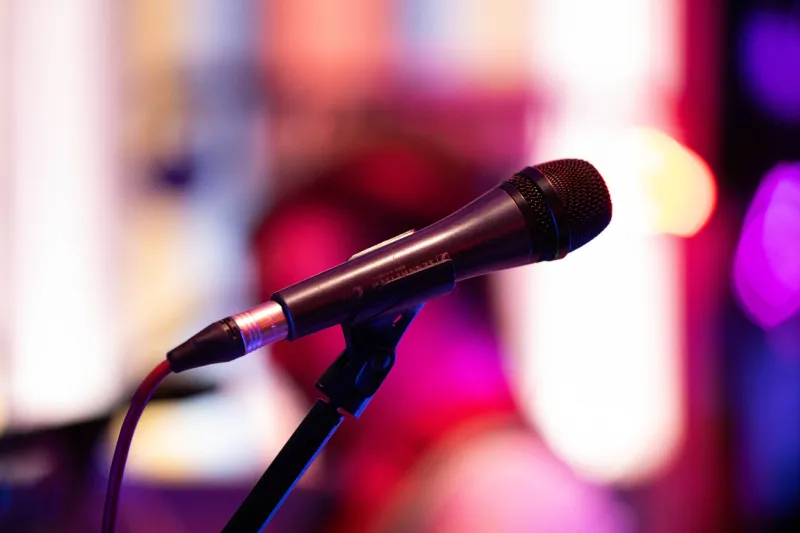
A microphone check is a tiny piece of theatre. Tap. Tap. 'Testing, testing.' A pause. 'I'm not funny yet.' The sound engineer, who has heard every version of this line since roughly the invention of electricity, gives a thumbs up that says both 'yes' and 'please stop'.
The empty-room acoustics are a peculiar beast. Chairs do not laugh. Bodies absorb sound; without them, the room can sound either cavernous or weirdly dead, like a living room after the guests have gone. A comic will say a sentence at normal volume, then mutter it again at 40% volume, then try it in the voice of a disappointed PE teacher. This is not madness. This is calibration. They are checking where the laugh might land, whether the back row can hear a quick aside, and whether the microphone is going to reward their best material with a sudden screech of feedback.
You can learn a lot about a comedian in ten minutes of soundcheck. Do they thank the tech? Do they blame the tech? Do they use the time to test a new bit about the Wirral, or do they simply say 'two pints of lager and a packet of crisps' into the mic and nod solemnly? All of it matters. The empty room is not judging. It is listening.
The Staff Rituals: Glasses, Glitches and Good Luck Charms
Meanwhile, the venue performs its own pre-show ballet. Bar staff count glasses, polish pumps and negotiate with the ice machine, which has chosen tonight to have a personality crisis. Door staff rearrange chairs by millimetres, checking sightlines like they are staging a tiny Chester production of Swan Lake. Someone walks the room and moves a single stool two feet to the left. Nobody knows why. It is simply done.
There is always one person who says, 'It's always quiet before a good one.' There is always another person who checks the fire door. There is always a pre-show playlist that reveals more about the venue's soul than any mission statement: Northern soul, slightly aggressive indie, or the same three songs that have somehow survived since the building was a function room.
The rituals are not superstition, exactly. They are a way of making the room ready. Chester audiences are warm, but they are not mugs. They can smell a disorganised night from the top of the Rows. A calm soundcheck tells them, without anyone saying it, that the evening has been thought about. The chairs face the right way. The mic works. The bar is stocked. The vibe has been given a quick hoover.
Half-Volume Heckles and the Ghost Audience
Then comes the strangest part: the half-volume material. A comic will wander the stage, notebook in hand, trying out lines under their breath. A tag is tested. A callback is murmured. A story about a disastrous date in Chester gets a quiet run-through, followed by a pause and a muttered, 'No, that's too much information for a Tuesday.'
Without an audience, there is no laugh to judge. So comics judge the silence instead. Does the joke feel right in the mouth? Does the punchline arrive too early? Does the whole thing collapse when removed from the pub where it was first told? The empty room becomes a ghost audience: not hostile, not generous, just there. Occasionally the ghost audience coughs. That is usually the electrician.
This is why the pre-show hour is often funnier than the show itself, at least to anyone lucky enough to be loitering with a clipboard. You see the seams. You see the nerves. You see a confident headliner asking the tech whether the lights can be 'a bit less interrogative'. You see a newcomer practising the walk-on they have been thinking about since breakfast. You see the human beings behind the punchlines, which is oddly moving for a room full of stackable chairs.
The Sacred Bit: Why This Hour Matters
None of this is glamorous. There is no applause. The lighting is functional. Someone is eating a meal deal near the fire exit. But the soundcheck is where the night quietly decides what kind of night it is going to be. It is the deep breath before the first gag. It is the moment when a comedy room stops being a room and starts being a venue.
So next time you arrive at a Chester gig and the doors are still shut, spare a thought for the strange, sacred hour happening inside. A comedian is testing a joke on a wall. A bar manager is moving a stool with the gravity of a Chess champion. The microphone is being tapped for the fourth time. The empty room hears everything first.
And it keeps secrets. Mostly.