The Ninety-Minute Disappearance: Tracking Chester's Pre-Gig Comic Circuit
There is a moment, about ninety minutes before any Chester comedy night, when the headliner simply ceases to exist. They were there at soundcheck, they were there complaining about the monitor, and then — gone. No announcement, no farewell. Just a faint smell of lager and the sound of a door not quite closing.
Where do they go? We asked. Several visiting acts agreed to explain their pre-show rituals, on the strict understanding that we would describe locations vaguely enough that nobody gets ambushed while eating chips.
The Rule of the Unfashionable Corner
The single most consistent finding across our entirely unscientific survey: touring comics actively seek out the least appealing seat in any given pub. Not the worst pub — the worst seat in an otherwise decent one.
"I want the chair nobody wants," says Dez Mallory, a Salford-based act who has played Chester four times this year. "Next to the door that bangs. Facing the wall. Ideally with a fruit machine making a noise like a small robot being unplugged. If a table looks inviting, it's not for me. Inviting means people join you, and people joining you means I'm doing material at half six for free."
This is the central logic of the pre-gig hour. A comic is not resting; a comic is in a state of low-level professional standby, running lines under their breath and quietly hoping nobody says the words "you're the funny one, aren't you."
Panic Chips: A Serious Business
Ask any visiting act about Chester and the word "chips" arrives within about eleven seconds. The city's relationship with the fried potato is not a secret, and comics have noticed.
"There's a window," explains Priya Nandakumar, who headlines regularly across the north west. "Forty-five minutes out, I want chips. Twenty minutes out, I absolutely cannot have chips. The trick is hitting the gap. Get that wrong and you're doing twenty minutes of material with the physical confidence of a deckchair."
Several acts described a near-identical ritual: a modest portion, salt and vinegar, eaten outdoors, standing up, with the specific posture of someone who has made peace with their choices. Nobody orders anything complicated. Complicated is for the drive home.
The Scribble Bench
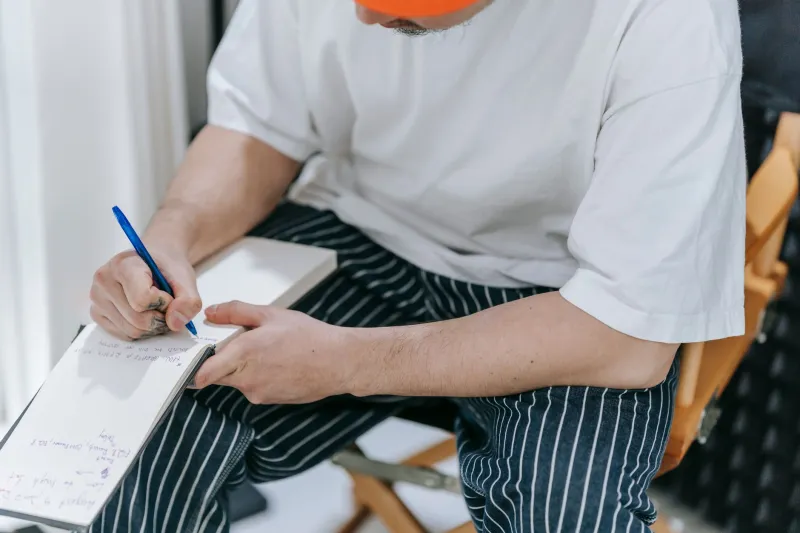
Chester has one enormous advantage over most comedy towns, which is that you can be alone with a notebook and look like a person having a lovely time rather than a person having a crisis. The walls help. The river helps. Any bench with a view of something old and pretty does half the work for you.
"I write my last three jokes outside," says Callum Reeve, a newer act on the circuit. "Not because I'm inspired. Because indoors I can hear my own thoughts, and my own thoughts are mostly 'that bit about the car isn't working, is it.' Outside there's a seagull being confrontational and I can blame the atmosphere."
What gets scribbled in those final forty minutes is rarely good. It is, however, necessary. Comics describe it as "closing the wound" — patching a set that was fine at 3pm and now feels structurally unsound. If you spot someone on a bench mouthing words at a pigeon with genuine intensity, that is not a crisis. That is quality control.
The Early Arrivals Problem
Here is the thing the audience never sees: the comic arrives at the venue, and the room is already a third full.
"That's the danger zone," says Mallory. "Those are the people who really want to be there. They've come early. They've got a front-row seat and a pint and a look in their eye. And they'd love a chat. And I'd love to give them one. But if I chat to one table, I have to chat to all of them, and then I'm not a comedian any more, I'm a man doing a meet-and-greet near some toilets."
Hence the doorway dodge — the practised art of entering a building at an angle, eyes down, moving with the purposeful stride of someone who has left something in the car. It isn't rudeness. It's the last available moment of silence before a job that is entirely made of talking.
Your Rough Map, Then
So here is the shape of it, without naming and shaming anyone's table:
- The quiet end of a Rows pub, ideally upstairs, ideally with a window that shows the street but not the other way round. Comics will pay a small premium for a seat facing away from the door.
- Anywhere near the walls or the river, where a notebook reads as "writer" rather than "odd bloke staring."
- A chip shop queue between 5:45 and 6:15, where the standing-and-eating ritual is observed with religious seriousness.
- Back streets off the main drag, particularly ones with a bench and no distractions, used for the final pass over the setlist.
- Not the bar of the venue itself, unless absolutely unavoidable, in which case: corner, pint, phone out, do not make eye contact.
What To Do If You Spot One
Nothing. Honestly. Nothing.
If you must acknowledge them, a nod is generous, a thumbs-up is acceptable, and a shouted "give us a joke then!" will get you a polite laugh and a small permanent entry in someone's internal notebook. They are at work. It's just that their work involves being liked in about an hour, and the ninety minutes before that are the only time they get to be quiet.
Besides, the good stuff only happens once the chips have settled and the notebook has been closed. You'll get the jokes. Let them have the bench.